June 19, 2026 – It took some time to clear
Nothing isn’t as clear or straightforward as it seems to be. For example, I am going to physiotherapy. I think I’ve gone about a dozen times, and I am making progress, but the journey is not over. At first, I thought I had a hip flexor problem after I got a Thai massage. Nope. That’s not right. I thought is issue was acute and I need was to put my hip in place. Nope. Wrong again. I thought it was due to falling on the ice a handful of months ago, and then I thought about my curling injury from a few years ago. Wait a minute… it was bigger than I thought.
Same story with my COGNITIVE CLOG… there was no quick fix. There are layers and layers of reasons/factors/variables that create this cognitive clog. I think about my bathroom sink. What’s creating that clog? Hair, bacteria, barf… who knows, but the sink would work a lot better without the clog. Sure, you can wait a bit longer for the sink to drain, but either pushing that clog through or pulling out what ever is making that clog is ideal. Either way, each takes bit of time and navigation to clear that clog. Well, I just got that today… cognitively.
I often wonder why I got into academia. I would say it was never a goal… but then I would be lying because I used to write on pieces of paper as a kid, “Dr. Christine Ho, BSc, MSc, PhD.” I did not take that pathway exactly, but for some reason, I knew I was going to be a doctor. It was something that I wanted, yet for many decades of my life, I believed that I am not a good writer, I am not a good reader, so what in my right mind said… let’s go into academia??? Not sure, but here I am. Lots of what I am very interested in academically is about efficacy, identity, and learning. Guess what? Those are all the areas that I struggle with.
I mentioned this in another blog post… that I heard in a podcast… RESEARCH is ME-SEARCH. I cannot deny this notion. Moreover, I’ve been trying to figure out my research program. I really dislike having to write my bio because you have to write about your research interests. And yet, after spending a lot of time trying to figure out what my doctoral research was going to be about and then having to research and write about this topic was a journey and a half. So much self-discovery, disappointments, and life changes took me down a path that soon after I figured out to write about and find the love for my work, I ditched it.
What do I mean about that?
Was there anyone interested in my work? I remember that I offered a session at the provincial math conference one year, and no one showed up except for one colleague who is a professor at another university who followed my work about Indigenous Education and Mathematics (of which I am writing a chapter about). I presented the work at an international conference, and no one showed up there. I did very well in my oral presentation during my defence and was told that this was one of the best defences that one of the members of the examination team had seen. That was a compliment, but the confidence for my work was rapidly declining even though my supervisor wanted me to publish and be a co-author.
I had no idea what was happening. A long story made short, I spent a lot of my time in academia hiding my work and trying to do other work that’s not really mine. Does that sound like a cognitive clog? It sure does. I did not value my work, and I was very sensitive to any feedback or comments about my work. Even though there was a manuscript ready to go, one rejection threw me over the edge. I had a tonne of self-doubt, and I created stories about my work and abilities that were not true. It’s like being in an abusive relationship, and I have the pleaser mentality. Don’t make waves, or nobody will like you. That was made pretty clear early in my journey in academia. I played the cards wrong. Lay low.
My productivity was slow and marginal. I gradually gained my confidence back in teaching, and I really parked my ambitions when my daughter started to attend university. I need to really find ways to create stability for us, so I just stayed the course. I wanted to learn more about research, but I never took the risk to pursue my research. I started to write about identity development and e-portfolios, but EdTech is not my field of expertise. At every moment, at every turn, I felt like I was “out-of-field” with my teaching and research. I could do it, but my heart was not deeply embedded in the work, even though it’s important.
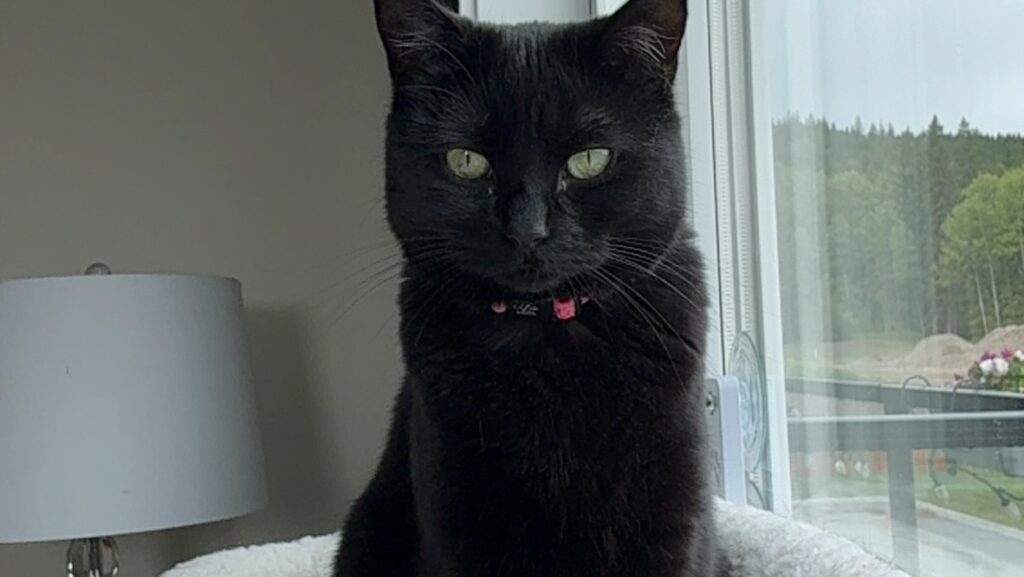
Over time, I established lots of stability in my work. I renewed my contract, bought a house, became a cat mom, got fully committed to a SLOW-professor lifestyle, and tried not to get to distracted by being hustled or feeling judged. I just got to the place where I wanted to do what I wanted to do on my own terms. Part of that was realizing how much I love mathematics education. But, I was also doing work around equity, identity, and professional learning. Lots of what I was doing at the university was dancing around my doctoral research without doing or continuing with that research, per se. Now I see, I have to return home.
And just like that, the cognitive clog clears.
Leave a Reply